Collagen vs. Keratin: What’s the Difference, and Why Do You Need Both?
Learn how these proteins support skin, hair, and nails - and why both matter for a complete approach to beauty from within.
You’ve probably heard a lot about collagen by now.
It’s in powders, drinks, gummies, skincare, and just about every beauty conversation out there.
But if you care about your skin, hair, and nails, there’s another protein worth knowing about too:
Keratin.
And no, collagen and keratin aren’t the same thing.
They actually do very different jobs in the body, which is exactly why understanding both can give you a much clearer picture of what “beauty from within” really means.
Collagen Is the Support System
Think of collagen as part of the framework underneath your skin.
It’s the most abundant protein in the human body and a major part of connective tissue. In the skin, it helps provide structure, strength, and support.
That’s one reason collagen gets so much attention as we age.
Over time, the collagen structure in our skin changes. Production slows, existing collagen can become more fragmented, and things like UV exposure can speed up that process.
The result?
Skin may not feel quite as firm or elastic as it once did.
And if you’ve ever looked in the mirror and thought, Wait, when did that happen? you’re definitely not imagining that skin changes with age.
So, What Does Keratin Do?
Keratin has a different job.
It’s a tough structural protein found in places like your hair, nails, and the outer layers of your skin.
Your hair strands are largely made of keratin.
Your nails are made of keratin too.
So while collagen helps support the deeper structural framework of the skin, keratin is a big part of the structures you actually see on the surface.
A simple way to think about it:
Collagen supports from underneath. Keratin helps build what’s on the outside.
Different jobs. Same bigger beauty picture.
Do You Need One More Than the Other?
Not really.
Collagen and keratin aren’t competitors.
Your body uses both.
That’s where beauty conversations can get a little too simplistic. We tend to look for one hero ingredient that’s supposed to do everything.
But your skin, hair, and nails don’t work that way.
They’re built from multiple proteins, nutrients, and biological processes working together.
So instead of asking, “Which is better, collagen or keratin?” the more useful question may be:
What role does each one play?
What Happens to Collagen as You Get Older?
This is where collagen becomes especially relevant.
As we age, natural collagen production declines, and the collagen already present in the skin changes in quality and organization.
Sun exposure, lifestyle, and other environmental factors can add to that process.
That doesn’t mean aging is something you need to fight.
But it does explain why skin may start to feel different over time, even if you haven’t changed much about your routine.
The moisturizer you’ve used for years may suddenly not feel like enough.
Your skin may feel drier.
Firmness may change.
Fine lines may become a little more noticeable.
That’s normal biology, not a failure of your skincare routine.
Can Taking Collagen Actually Help?
This is one area where the research has grown.
Studies on hydrolyzed collagen suggest that oral collagen supplementation may help support skin hydration and elasticity.
That doesn’t mean collagen is a magic fix for aging skin.
But it does mean there’s growing evidence that what you consume can play a role in how your skin is supported from within.
And that’s part of why hydrolyzed collagen is so common in supplements.
Hydrolysis breaks larger collagen proteins into smaller peptides, which makes them easier to digest.
Keratin Is a Little Different
Keratin is naturally tough.
That’s actually part of what makes it useful in hair and nails.
But that toughness also means intact keratin isn’t especially easy to digest.
So when keratin is used in a supplement, the form matters.
Hydrolyzed keratin has been broken down into smaller components, making it more suitable for nutritional use.
Again, the takeaway is simple:
It’s not just about whether an ingredient is there. It’s about the form it’s in.
Beauty Is Bigger Than One Ingredient
Collagen and keratin are important, but they’re still only part of the picture.
Your body also relies on other nutrients to support healthy skin, hair, and nails.
Vitamin C, for example, is required for normal collagen formation.
Biotin plays a role in normal macronutrient metabolism and is commonly associated with hair, skin, and nail nutrition.
Hyaluronic acid is naturally found in skin and connective tissue and is known for its ability to bind water.
So if you’re trying to support beauty from within, one ingredient probably isn’t going to tell the whole story.
Your body needs building blocks.
Plural.
Where Collagène Fits In
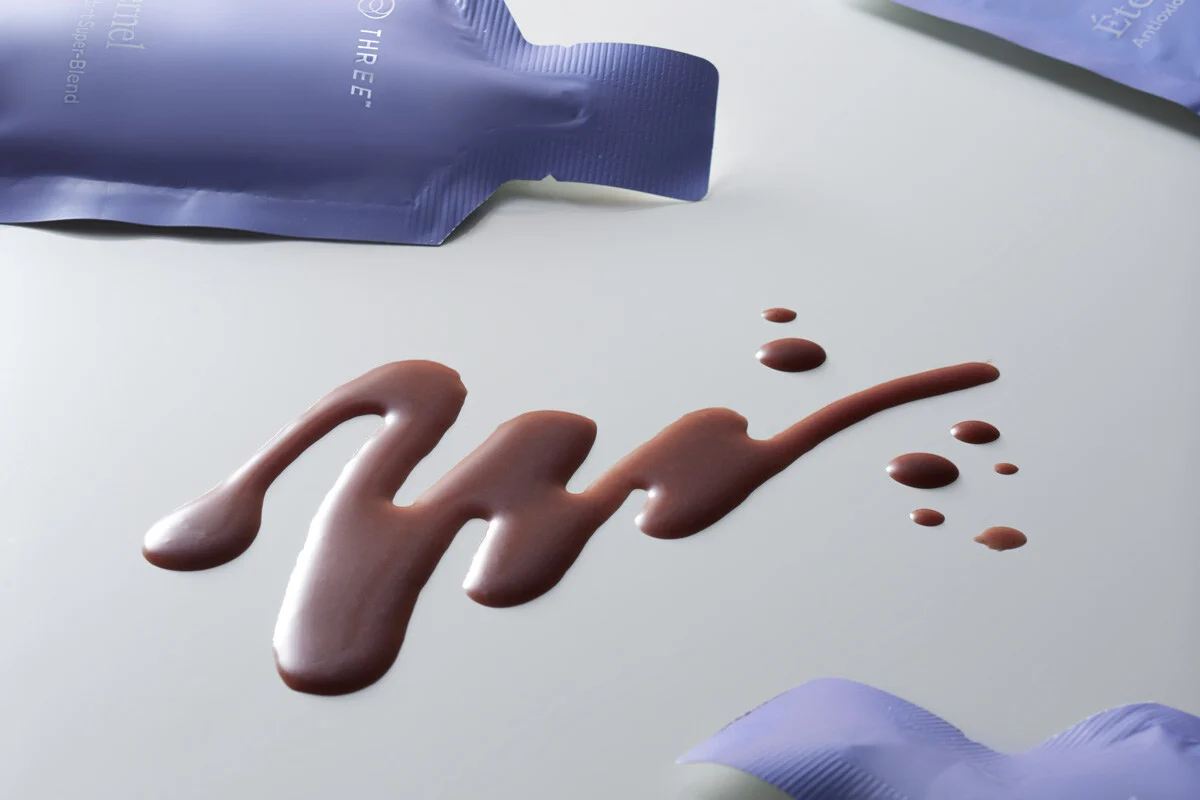
That broader approach is exactly why we formulated Collagène by THREE with more than collagen alone.
Each serving provides 5 grams of marine collagen, along with hydrolyzed keratin, vitamin C, hyaluronic acid, biotin, and pomegranate juice concentrate.
The idea is simple.
Collagen supports one part of the structural story.
Keratin supports another.
And the other nutrients help round out the formula.
Because healthy-looking skin, hair, and nails aren’t built from one ingredient.
They’re the result of many different building blocks working together.
So instead of asking whether collagen or keratin is better, maybe the better question is:
Why choose only one part of the story?
Collagène was designed to bring those pieces together in one formula that supports healthy skin, hair, and nails while supporting the body’s natural collagen production.*
Because beauty may show up on the outside, but the building blocks start within.
*These statements have not been evaluated by the Food and Drug Administration. This product is not intended to diagnose, treat, cure, or prevent any disease.